Wednesday, May 26, 2021

2021 Renovation Update #2 - Bunker Renovation

It has been a very productive two weeks since my last update, and although the region is in desperate need of rain, the weather has been phenomenal for the construction aspect of the Olde Florida renovation! I am pleased to report that the project is on schedule and almost everything is going exactly as planned. 


In this update I am going to focus on one component of the project, the bunker renovation. A significant aspect of the project is the renovation of the 89 bunkers, which account for 3.27 acres on the golf course. Just shy of 20% of the total cost of the project will go towards the bunker renovation. 


The bunkers at Olde Florida have never been renovated. In the last 29 years we have replaced all of the sand once, but the construction is original. Although the bunkers have played exceptionally well, it was decided to do a complete renovation of the bunkers this summer for two reasons. 


First, a significant number of bunkers have lost the Rees Jones design features that were in place when the course opened in 1993. A second, and much more significant reason for the renovation is because of the bunker construction method. Since we built the bunkers almost three decades ago several new construction methods and liners have been developed that significantly reduce maintenance and improve playability. In particular, the bunker sand washing that routinely occurs after heavy rains is almost eliminated with these new construction methods and materials.   

Left Greenside Bunker on #4 Prior to Renovation - 3/12/21
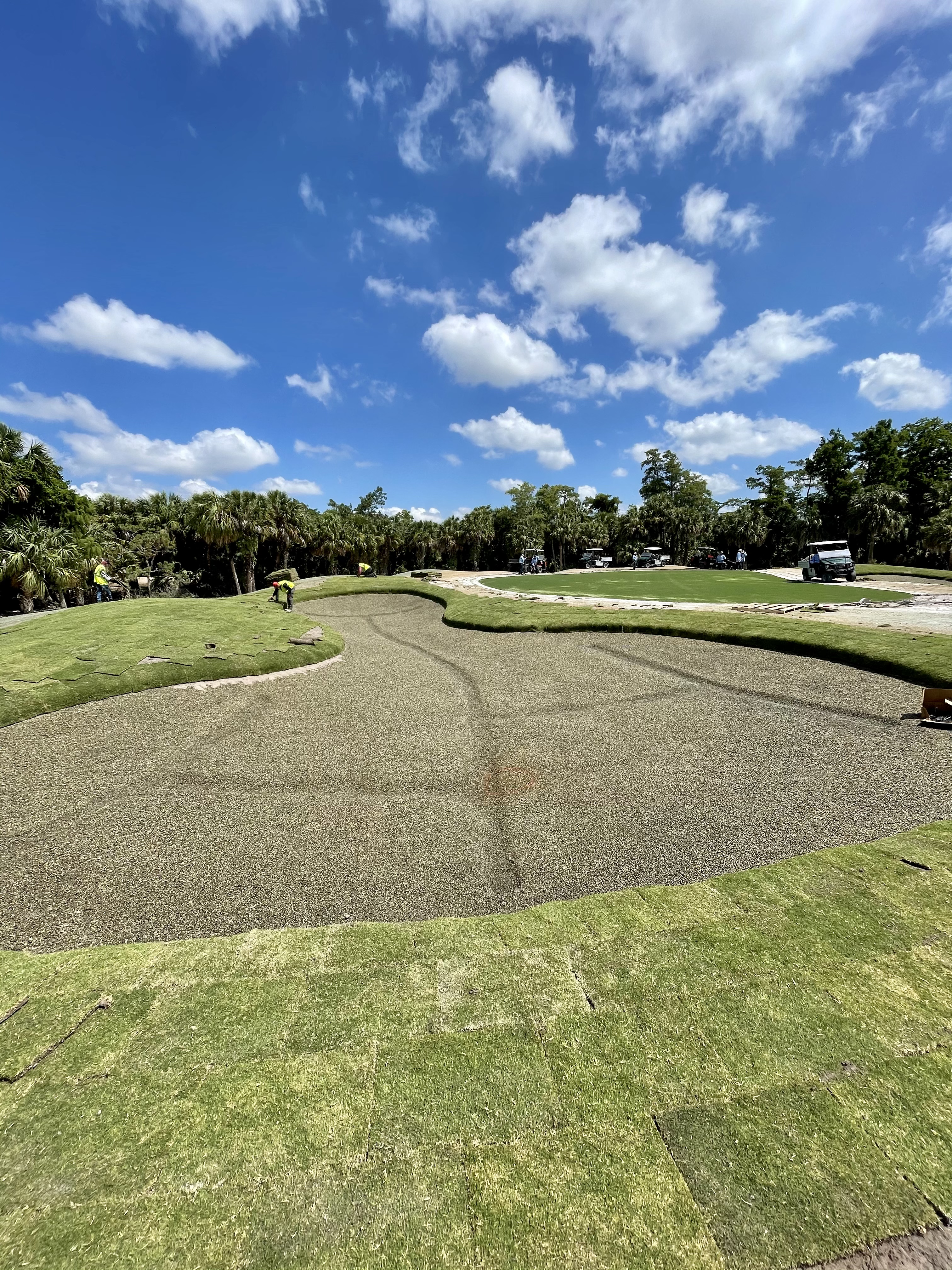
Left Greenside Bunker on #4 - 5/14/21
Greenside Bunker on #4 - 5/26/21

Over the last 10 years I have evaluated and performed on site testing of several bunker liners/construction methods. After significant consideration and analyzation of the aspects of each, the Better Billy Bunker Method was selected. The key component to this construction method is the polymer-coated gravel liner in the floor of the bunker which allows water to pass through at a rate that exceeds 1500 inches per hour. When water is properly diverted around bunkers, even during extremely heavy rain events the bunker sand hardly moves.


Bunker washout is a substantial issue for most golf courses and certainly at Olde Florida. Washouts contaminate sand and require staff to spend countless hours repairing bunkers after major rain events. After a heavy rain it’s not uncommon for us to assign as many as 16 employees, each spending 8-12 hours pumping water, removing silt and shoveling sand to repair bunkers. By installing the Better Billy Bunker Method we will almost eliminate washouts allowing us to reallocate a significant amount of labor to other tasks.  


Developed in 2009, the Better Billy Bunker Method has been installed on over 1,200 golf courses worldwide. In the YouTube video here and below are testimonials on the method from Golf Course Superintendent’s at; The Country Club of Castle Pines, The Loxahatchee Club, St. George’s Golf and Country Club, Winged Foot Golf Club, The Robert Trent Jones Golf and Country Club and others. 


Each facilities needs/desires, time frame and budget for a bunker renovation can be different. Therefore, the renovation process to the Better Billy Bunker Method can be slightly different. 

Below is an explanation of the project at Olde Florida. 


During our club closure in March (16th & 17th) Greg Muirhead, Senior Vice President / Senior Designer with Rees Jones, Inc., was onsite to define the features that have been lost. Greg and I were both on site in 1992 during construction, so in addition to the photographs I have from the early days, we both have first hand knowledge of the original shape of the bunkers.  As Greg painted the outlines of each bunker on March 17th I took photos. The photos from that day are now being used to mark the edges for our construction/renovation. 
Greg Muirhead Marking Right Greenside Bunker Hole 4 - 3/16/21
Right Greenside Bunker Hole 4 - 3/16/21
The physical aspect of the bunker renovation process at Olde Florida began with the removal of the existing bunker sand. The removed sand was stockpiled for later use as topdressing in historic wet areas. With the sand removed, the original drainage pipe and limestone gravel was removed from each bunker. Our original thought was we might try to reuse this pipe, but after inspection of the pipe it was determined new pipe would be the safer and wiser choice. After pipe and gravel removal, two crews from Leibold Construction began shaping the floor of the bunkers and moving soil to areas that needed features reestablished.

Sand Removal Greenside Bunker - Hole 4

Existing Drainage Pipe and Limestone Gravel Removal - Hole 7 

Bunker Shaping - Hole 5
Adding Soil to Reestablish Bunker Features - Hole 3

The floor in each bunker is being shaped to increase the slope and subsequent rate of water infiltration into the drainage pipes. When the floor is shaped to the proper slope and 10" depth (explanation below), drainage is installed. The elevation and slope of each drain line is carefully inspected prior to new pipe and granite gravel being placed in the drainage trenches. 


When drain pipe and gravel installation is complete an exact 3" layer of granite gravel is installed in the entire floor of each bunker and the Better Billy Bunker patented polymer is sprayed to a depth of 3/4". This secures the gavel in place. The gravel layer acts as both a liner between the subgrade and the bunker sand as well as a conduit for water to enter the drain pipe. 


The final step is the installation of 7" of new, angular bunker sand. As was previously mentioned, since the gravel is an exact 3" depth and the sand is an exact 7" depth, the floor of the bunkers are carefully constructed to an exact 10" depth from the floor to the new grass line. The gravel slope/contour matches the sand slope/contour exactly.   


Adding New Drainage and Granite Gravel - Hole 3
Drainage Left Greenside Bunker - Hole 4

Adding 3" of Granite Gravel on the Bunker Floor - Hole 3
Spraying Polymer to Secure Granite Gravel - Hole 4
Gravel Secured with Polymer and New TifTuf Being Installed - 5/26/21 
Gravel Secured with Polymer and New TifTuf Being Installed - 5/25/21
Bunker Sand Installation on Hole 3 - 5/26/21

Greg Muirhead returned to Olde Florida this week to inspect the completed bunkers on holes 3-8 and he was extremely pleased. 

Note: The first 6 holes to be grassed are 3-8, which is why bunker construction was completed on these holes first.
(L-R) Andy Polzin, Assistant Golf Course Superintendent, Greg Muirhead and Darren J. Davis, CGCS Hole 3 - 5/25/21


Monday, May 3, 2021

2021 Renovation Update #1

It's been only two weeks since the golf course was closed for play, but the progress on the renovation has been tremendous!!! 

The day after closing a cold front stalled on top of Southwest Florida. The chance for rain and a fair amount of wind delayed our second herbicide application for three days. Although it altered our schedule, it was actually a positive since it provided additional time for bermudagrass regrowth! 

My staff was able to complete the second herbicide application Thursday and Friday 4/22 and 4/23.

Second Hebicide Application on Hole 1 - 4/22
Bermudagrass Regrowth Prior to Second Herbicide Application  

During the second closed week we had three contractors on site each working on separate aspects of the project. Our main contractor, Leibold Construction is currently working on the bunker renovation. 

The first step in the bunker renovation is the removal of existing sand. After the first week the sand was removed from holes 1-10 and some of the bunkers on holes 11 and 18. We are anticipating the sand from all 148,655 square feet of our bunkers will be removed by the end of day on Wednesday 5/5. Leibold will then begin reshaping the bunkers incorporating some the original features that have been lost and begin the installation of the Better Billy Bunker system. 

I will provide more information on the Better Billy Bunker system in a future/separate blog entry 

Sand Removal 4 Green

Below is a video of sand removal on 4 green:

The contractor that performs our Drill and Fill aerification on the greens was also on site for the first three days of the second week. You may recall that last summer we did a single Drill and Fill aerification. This is a link to a blog entry I previously published on extending the performance of putting greens 

This summer, with the golf course being closed and the subsurface in need of continued modification to maintain the functionality of the USGA greens, we performed a "double". The "double" tightened the area impacted from 6" by 7" to 3" by 7". The holes are 1" in diameter and drilled to a depth of 10". Each hole was completly filled in the process with a total of 149 tons of dried, bagged sand.   

Drill and Fill on Hole 14 - 4/28
Drill and Fill on Hole 15 - 4/28


Below is a video of the Drill and Fill aerification process on our practice green:


Solitude Lake Management also had a productive week starting the installation of the Sox Erosion System around the greens complexes on holes 1 and 5. The Sox product is a bioengineered control system that halts shoreline erosion. 

In the 29 years since being constructed we have experienced a significant amount of erosion in these two areas. This process will restore the original slope and the product will prevent the areas from any future erosion. Once complete, sod is placed on top of the fabric. 

I will provide more information on the Sox system in a future/separate blog entry. 

Hole 5 - 5/1/21

The third contractor on site was Aeration Technology. They are performing a process known as fraise mowing. Seven days after the second herbicide application we began the fraise mowing. The fraise mowing is removing 1" of material, which not only removes the dead material, it also exposes rhizomes (below ground growing parts) that are still living. 


The additional sunlight and oxygen that the living plant material (rhizome) will now be exposed to will allow for increased bermudagrass regrowth prior to the third herbicide application. 

Fraise Mowing on Hole 7 - 4/29

A Living Rhizome Exposed 1" Deep After Fraise Mowing - Hole 7

Below is a video of the fraise mowing on hole 8:


My staff who were not involved in the loading of sand into the Drill and Fill machinery were doing our annual, or biennial (depending on the area) trimming of palms and oak trees. This will continue throughout the summer as time permits.

Trimming Palms and Oaks Hole 1/10 

Finally, my staff began the eradication of all "off-type" grass in the TifEagle greens. With the golf course closed for play this summer it was a perfect time to remove the small amount of invasive turfgrass.  After a week without mowing the areas could be clearly identified by their more aggressive growth habit.  

We carefully applied a non-selective herbicide to the small spots. In 30 days the areas will be retreated and a few weeks later will be plugged with TifEagle from our nursery green. The total area affected on the greens is less than 1%.

Marking Off-Type to be Eradicated on Hole 13


Saturday, April 3, 2021

Growing Grass .... to Kill It

A number of people have asked, “Why is the golf course being fertilized and irrigated when we are trying to kill it?” 


Similarly, some have said, “Why can’t we drive golf carts wherever we want, it’s dead anyway.”


The easy answer is, “It is not dead, and we are doing everything we can to try and make the turfgrass grow! Yes, growing grass to kill it.


Regardless of the amount of herbicide applied in a single spraying, one application will not kill bermudagrass. Re-growth is essential between the multiple applications. Spraying “brown”, non-actively growing bermudagrass with a herbicide is of no value. 


To make turfgrass grow a plant needs four things. The correct amount of: 


1. Water

2. Nutrients

3. Air 

4. Sunlight 


Water      We are providing the plant with water through irrigation. 


Nutrients     We are providing the plant nutrients by fertilizing with granular and liquid fertilizer. 


Air              Turfgrass needs air in the soil. This is why we are asking that you obey traffic control devices. Concentrated traffic reduces turfgrass growth in two ways - wear above ground and soil compaction below the surface. 


In laymen terms, compaction presses soil particles together eliminating air and water space. Compaction reduces the plants ability to maintain and create roots, which are needed for growth. 


Sunlight     We stopped filling divots after the first herbicide application on March 16th so the plant can have full access to sunlight.


This is also why we are mowing continuously in multiple directions. We are removing dead/brown leaf tissue to provide green leaf tissue better access to sunlight.  


So to reiterate, our bermudagras is NOT dead yet. We are doing everything we can to try and make the turfgrass grow so that we can kill it to the best of our ability with the two additional herbicide applications on April 19 and May 21. 


I am happy to report we are doing GREAT and we are seeing terrific re-growth! 


Although we will be closed for golf play after the April 19 herbicide application, I can assure you that we will continue to do everything you have read above (as well as compaction relief and vertical mowing) so that after the third application on May 21, we will have the highest level of eradication possible. 


18 Fairway - April 3, 2021


Holes 12-15 - April 2, 2021


Irrigation on Hole 11 to water in and release the applied granular nitrogen. Nitrogen is also being applied in the irrigation water (fertigation). 


Thursday, March 18, 2021

Glyphosate Usage at Olde Florida Golf Club / Part 2

Part 2

Successful Bermudagrass Eradication 


One of the most crucial aspects of the 2021 renovation at Olde Florida is the eradication of the existing turfgrass. If a high level of bermudagrass eradication is not achieved the results of the golf course renovation will be less than desirable


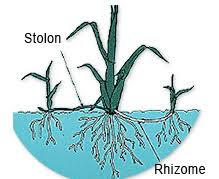
Bermudagrass eradication is extremely challenging due in part to the plants inherent deep rhizomes. A rhizome is a horizontal, underground stem, which puts out lateral shoots and roots at multiple intervals. Rhizomes can remain dormant for long periods of time and eventually allow bermudagrass to regenerate when growing conditions are favorable.


Extensive research has been performed on bermudagrass eradication. I have based the eradication program at Olde Florida on three peer reviewed university studies, which are summarized below. 


The first study was performed by B.J. Johnson, while at the University of Georgia. The results of Dr. Johnson’s research were published in 1988. The data showed that three applications of glyphosate at 2 quarts per acre were needed to achieve acceptable control. His applications were made in May, June and August. 


Dr. Johnson's research also demonstrated that three glyphosate applications, which is a lower than allowable labeled rate, were much more effective than a higher, single or split application. 


The second definitive study was performed by John Boyd at the University of Arkansas in 1998 and 1999 and published in 2000. Dr. Boyd's research confirmed Dr. Johnson's data from a decade earlier. The results again demonstrated that three applications of glyphosate at 2 quarts per acre, to actively growing, non-stressed bermudagrass over the entire summer were necessary to achieve 98% control. 


Dr. Boyd's study also confirmed that repeat split applications were far superior to a single application of the herbicide at the maximum label rate. In fact, Dr. Boyd found that 5 months after a single application at the maximum label rate, the plot had zero percent control, as compared to 98% control on the three application plot at the reduced rate of 2 quarts per acre.  


Finally, in 2001 and 2002 at the University of Florida, West Florida Research Center another study on bermudagrass eradicaton was conducted. The data from this research concluded that three applications of glyphosate tank mixed with an additional herbicide, Fusilade II, four weeks apart achieved 99% control 12 weeks after initial treatment. Dr. Bryan Unruh, Professor and Associate Center Director, University of Florida was one of the researchers in this study. I have consulted with Dr. Unruh on many aspects of the project at Olde Florida. 


The timing between the herbicide applications is also a key component to the bermudagrass eradication process. Re-growth is essential since spraying “brown”, non-actively growing bermudagrass with postemergence herbicides is of no value. An important component of encouraging bermudagrass re-growth is the maintenance of  adequate moisture and nutrient levels in the soil. The Olde Florida agronomy team will be providing irrigation based on the plants need, as well as supplying a food source with light frequent applications of soluble nitrogen throughout the entire eradication process. 


The herbicide applications at Olde Florida are scheduled (weather permitting) for March 16, April 19 and May 21. Grassing the golf course will not begin until mid-June, which will allow for additional spot treatments (after the scheduled three complete applications) if deemed necessary.    


Herbicide Application at Olde Florida Golf Club on March 16, 2021


 Herbicide Application at Olde Florida Golf Club on March 16, 2021


 Herbicide Application at Olde Florida Golf Club on March 16, 2021


 Herbicide Application (Click here, or above to play video) at Olde Florida Golf Club on March 16, 2021


Thursday, March 11, 2021

Glyphosate Usage at Olde Florida Golf Club / Part 1


Part 1 

Glyphosate Health and Safety 


Glyphosate is the active ingredient found in numerous herbicides including Roundup, one of the products the agronomy team will utilize to eradicate the existing bermudagrass at Olde Florida. Since its introduction in 1974, glyphosate products have become one of the most commonly used herbicides in the U.S. The widespread adoption is the result of glyphosate’s ability to control a broad spectrum of weeds, its extensive economic and environmental benefits and its strong safety profile. 


Glyphosate works by inhibiting an enzyme present in plants that people and animals do not produce. Glyphosate exhibits low toxicity to humans and non-plant wildlife over both short and long-term exposures. In the environment, glyphosate binds tightly to soil, degrades over time and does not accumulate in the food chain.


Glyphosate is among the most extensively tested pesticides on the market. Most recently, in January 2020, the U.S. EPA published its Registration Review Decision on Glyphosate and stated “EPA has thoroughly evaluated potential human health risk associated with exposure to glyphosate and determined that there are no risks to human health from the current registered uses of glyphosate and that glyphosate is not likely to be carcinogenic to humans.”


The EPA’s latest decision on glyphosate adds to the overwhelming consensus among leading expert health regulators worldwide for more than 40 years that the products can be used safely, and that glyphosate does not cause cancer. In addition to the U.S. EPA, leading health authorities from around the world continue to conclude that glyphosate-based products are safe when used as directed and that glyphosate does not pose a carcinogenic risk.


As with any pesticide utilized at Olde Florida, the agronomy team will follow all label instructions and safety precautions explicitly when applying the Roundup, and the other products being utilized during the renovation project. The label does specify, "Keep people and pets off treated areas until spray solution has dried."  Therefore, the golf course will remain closed on the day of application. For a complete Roundup label please click here.  


More detailed information on scientific studies associated with glyphosate can be found in the links below: 


US EPA: Releases Risk Assesments for Glyphosate


US FDA: Questions and Answers on Glyphosate


National Pesticide Information Center: Glyphosate Fact Sheet


In addition, for a very thorough and informative YouTube video prepared by the University of Florida on the controversy over the use of Glyphosate please click here:  Glyphosate: Understanding the Controversy  


Friday, January 1, 2021

Assistant Golf Course Superintendent Position Description / Job Annoucement

Assistant Golf Course Superintendent Position Description
Available Immediately 

Designed by Rees Jones and opened in 1993, Olde Florida Golf Club is a distinguished private, individual-membership club located in Naples, Florida. Olde Florida is a golf-only facility that exists for the sole enjoyment of its membership. Olde Florida is recognized as one of the premier clubs in the Southwest Florida market and beyond. Located on 220 acres, the 18-hole course provides a challenging, but enjoyable, test of golf in a natural setting. Olde Florida is an established, invitation-only club, currently with a multi-year waiting list to join. 


The club and the agronomy team continually strive to upgrade the course and facilities as well as improve in all areas of maintenance and management. This desire has led to Olde Florida undergoing a significant renovation project over the summer of 2021. Among numerous other items, included is a complete re-grassing to TifTuf bermudagrass as well as a bunker renovation with the installation of the Better Billy Bunker system. In 2010, the original Rain Bird hydraulic system was replaced with a Toro electric Lynx Control System, but the 2021 renovation will include the replacement of the 1295 individually controlled Toro 855 heads with the Toro Infinity series heads. Leibold Irrigation/Construction has been hired as the contractor to assist Olde Florida staff with the project. 

The club has had only one golf course superintendent, Darren J. Davis, CGCS. Davis was hired in 1992 and has helped advance the careers of dozens of turfgrass professionals. Among other industry involvement and accolades, Davis was the 82nd president of the Golf Course Superintendents Association of America and is currently active on the local, state and national level. More information on Davis and Olde Florida can be found at:  DarrenJDavisGCS.com 

The individual we are seeking is someone with a strong personality and skillset, but more importantly, a perpetual positive attitude. While there is never room for complacency among any staff, a positive work-life balance will be provided and is expected. In addition, personal character and leadership qualities will have more of an impact than tactile abilities or agronomic knowledge. Efficiency, effective time management and putting others before yourself are also attributes that we are seeking in our newest agronomy team member at Olde Florida. 

Under the golf course superintendent's direction, the assistant superintendent manages and supervises a dedicated staff of golf course grounds personnel and is responsible for assisting in the planning of daily routine maintenance and long-range golf course improvements. 


Essential Duties and Responsibilities: 
Eager to learn and perform a lead role in the golf course’s daily preparation for members and guests, which includes proper maintenance of greens, tees, fairways and roughs, emphasizing environmental stewardship 
 

Responsible for training staff in all areas of course maintenance, which includes the proper care and storage of all equipment 
 

Forward-thinker who is detail-oriented and possesses a keen eye to promote a positive working environment 
 

Assist in an intricate water-management plan, which includes hand watering and syringing, irrigation program setup and adjusting run times as needed 
 

Safety is paramount in all golf maintenance areas, which includes the shop, all equipment, course, roadways, chemical usage and storage 
 

Work with the equipment manager to ensure that all equipment is properly cleaned and stored 
 

Supervise and participate in chemical and fertilizer applications to ensure proper handling of materials, which includes maintaining inventory and adequate record management 
 

Ensure a professional appearance of staff, course, equipment, and the shop are essential parts of this position 
 

Help prepare and conduct morning staff meetings to ensure team members are well informed and safe 
 Recommend purchases and assist in maintaining inventory levels

Participate in continuing education opportunities to further develop skills and remain abreast of the latest developments 

Liaise with the golf professional staff on course conditions 


Supervisory Responsibilities: 
The assistant superintendent maintains a supervisory role per club policies and applicable laws and regulations. The individual will play a vital role in recruiting, interviewing and training staff, planning a daily schedule, and assigning duties. 

Qualifications: 
Possesses good communication and coaching skills 

If not currently licensed, a commercial applicator license from the Florida Department of Agriculture & Consumer Services Pesticide Certification Office will be required after employment 

Possess a working knowledge of golf course conditioning, team 
building, equipment operation, water management, course construction and 
professional development 

Salary/Benefits: 
Salary $55,000- $60,000, commensurate with experience 
Health Care Safe Harbor 401(k) plan (100% match up to 3% contribution, 50% match between 3% - 5%) Clothing allowance 
Dues (regional, state and national associations) 
Continuing education 
Meals 
Paid vacation 
Aflac policies available 
Christmas bonus 
Cell phone reimbursement 
Golf privileges and employee discount on golf shop purchases 

Education and/or Experience: 
Graduate of an accredited college or university with a degree in turfgrass science/management or related field is preferred. 

A minimum of three years golf course maintenance experience is required. 
 
Contact: 
Please send resume, cover letter and any questions about the position to: 

Darren J. Davis, CGCS 
DarrenJDavis@aol.com 
(239) 353-4441 

Olde Florida Golf Club 
Darren J. Davis, CGCS 
9393 Vanderbilt Beach Road Ext. 
Naples, Florida 34120


Thursday, June 11, 2020

Extending The Performance of 27-Year Old Putting Greens

The greens at Olde Florida Golf Club were constructed in 1992 to USGA Specifications. They were resurfaced in 2000, but the subsurface has never been renovated. As you might have read in my May 21 blog entry, "2021 Golf Course Renovation", the upcoming project will not include a greens renovation. In this entry I will provide more detail on why that decision was reached, and what our plan is moving forward to continue extending the performance of our 27-year old greens. 


One of the key components of extending the life of a putting green is maintaining adequate subsurface drainage and soil porosity. This is absolutely vital for the successful management of turfgrass. This has become even more critical as we maintain turfgrass on greens with an intensity, and at heights of cut that were unheard of even 10-15 years ago. If challenges exist with either the drainage or soil porosity, oxygen levels in the rootzone will be low, which can result in turfgrass decline, especially during stressful weather. 


While some organic matter in a putting green is beneficial for the receptiveness of golf shots, as well as water and nutrient holding capacity, excessive accumulation will reduce porosity and decrease drainage. There needs to be a healthy balance, and the removal of organic matter through aeration or aggressive vertical mowing, as well as the dilution with frequent sand topdressing are key components of achieving this balance.


Having been hired as we began construction of the golf course in 1992, I was able to monitor the building of the greens. Equally important, I was able to put a summer cultural practice program in place from day one that has enabled us to maintain acceptable subsurface drainage and porosity.   


Even through we have properly maintained the greens from the beginning,  before making the decision to not renovate the greens in 2021, we had several random selected core samples analyzed by an accredited soil testing laboratory. The reports we received confirmed that the physical properties that influence subsurface drainage and soil porosity are good. While still within the desired range, since the renovation in 2000 we have developed a 7″ layer of organic material on top of the original USGA greens mix. 

4" profile taken on 18 green, November 2019


4" profile taken on 18 green, November 2019
7" of organic matter has accumulated since the resurfacing in 2000


As the pictures above depict, even with frequent aeration, vertical mowing and sand topdressing, organic matter will accumulate over time. Consequently, to extend the performance of mature greens traditional core aeration needs to be supplemented with soil modification techniques that can deposit sand completely through the organic layer. Such processes include Drill and Fill and DryJect. Olde Florida will be incorporating both of these this summer. From May 27 - May 29, a Drill and Fill was performed on the greens, and the DryJect will be utilized during the last closed week of the summer, September 21 - 28.   


The Drill and Fill and DryJect processes effectively increase soil porosity and drainage due to the large amount of sand that is delivered deeper into the soil than would be possible with traditional core aeration. For deeper soil modification, the Drill and Fill methods is preferred. When lifted from the subsurface, the drill removes organic matter from the profile, leaving channels that are backfilled with dry, bagged sand. At Olde Florida, a 1” drill bit penetrated the surface of the greens to a 10” depth. Directly into the 10” holes, 168,000 pounds or 84 tons of sand was added to the subsurface of the greens.


This is a YouTube video of the Drill and Fill on 6 green at Olde Florida


4 semi loads of dried, bagged sand were deposited into the greens
 during the Drill and Fill process 


Drill and Fill May 27th on the practice green 

Drill and Fill, May 28th on 9 green

Drone shot of 9 green, May 28

15 days post Drill and Fill on practice green at Olde Florida  

15 days post Drill and Fill on practice green at Olde Florida 

The DryJect, that we will perform later this summer deposits  a similar quantity of sand into the profile, but at a slightly shallower depth and no organic matter is removed in this process. 


DryJect demonstration, January 2020 on the nursery green

DryJect, January 2020 on the nursery green 

Both of these practices will not be a substitute for standard core aeration at Olde Florida, rather they are treated as supplements. Essentially they are soil modification treatments. In addition to the two processes this summer, we will do three additional treatments in 2021. After 2021, we will perform one annually.


In addition, keeping putting green subsurface drain lines operational is extremely important. This is especially critical in areas like Southwest Florida, where our annual rainfall can exceed 70”. 


For the last 27 years, all of the greens subsurface drainage systems at Olde Florida have been checked annually by inserting a 1” hose into the top of the system and running at full pressure until the water leaves the exit pipe.


This link will take you to a very informative video series on the USGA Putting Green Construction Method


Profile of the USGA Putting Green Construction Method